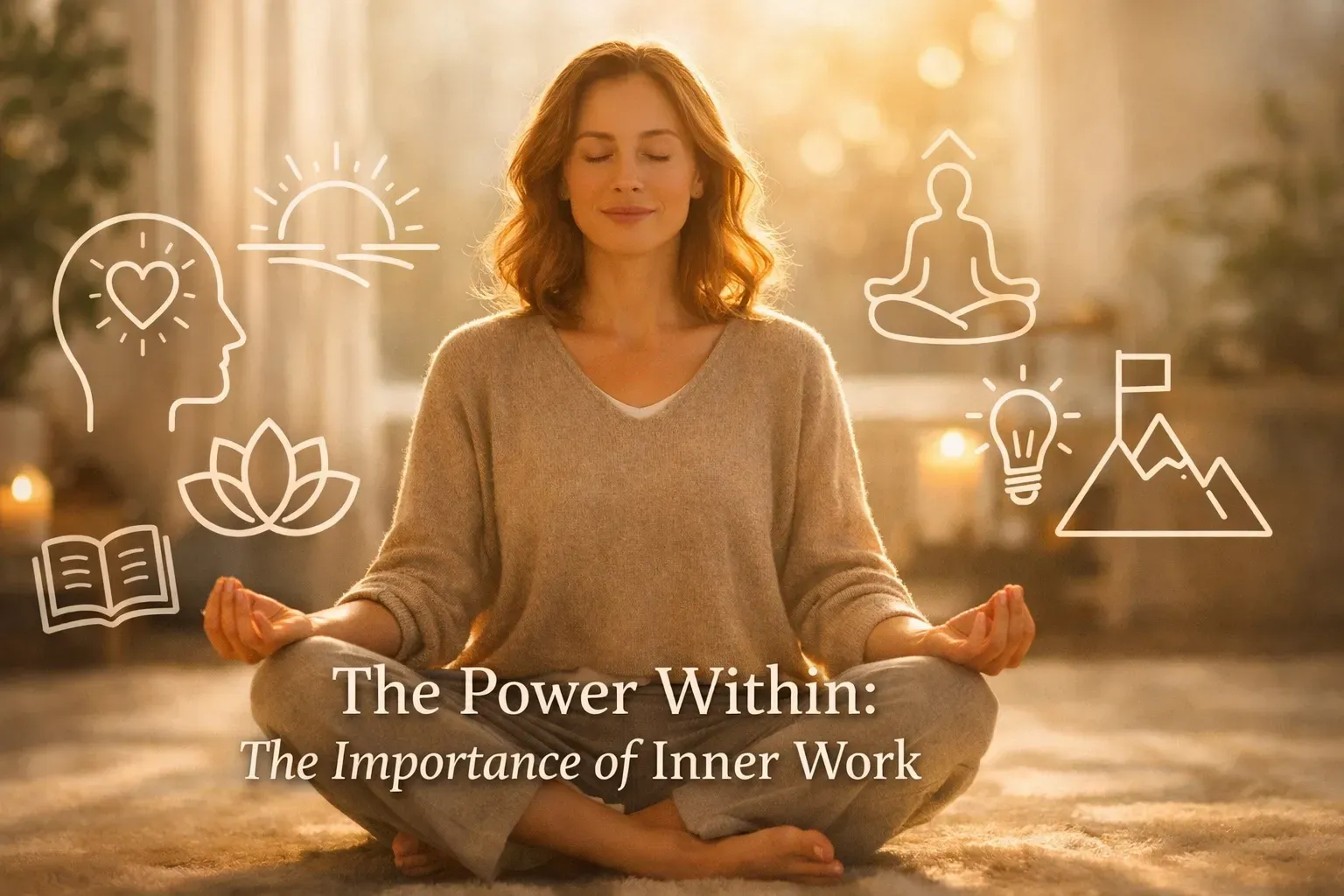
The Power Within: The Importance of Inner Work
"Personal growth and inner work are the seeds we plant within ourselves, cultivating a garden of self-discovery and transformation."
You have the title. You have the beautiful home. You’ve mastered the external game of life to a degree that most would envy. Yet, if you’re being honest, there’s a quiet disconnect that hums beneath the surface of your morning espresso. It’s that nagging feeling that despite all the accolades, something vital is missing: a sense of deep, unshakable alignment.
Welcome to the concept of inner infrastructure. Inner work is not just a nice-to-have hobby for your weekend retreats. It is the fundamental internal navigation system that determines whether you are truly leading your life or simply reacting to it. In the world of professional development and coaching, we often focus on strategic output. But at Ananda Experience, I believe that your external success is only as sustainable as the internal foundation it sits upon. Let’s dive into why this inner work is actually the most important project you will ever manage.
1. Uncovering the Self: Beyond the professional mask
In our fast-paced world, society often hands us a script. We become the high-achiever, the fixer, or the reliable executive. These roles aren't bad, but they are often masks that we call parts in Internal Family Systems (IFS) we've mistaken for our true identity.
Uncovering the Self is the process of peeling back these layers of societal conditioning to reveal the Self at the core. The Self is your inner compass. It is naturally calm, curious, and compassionate. When you engage in this level of inner work, you stop being a collection of roles and start being the leader of your own internal system.
Here are some simple ways to start uncovering the Self:
- The who is speaking? practice: When you feel a surge of stress about a deadline, ask yourself, "Which part of me is feeling this?" Is it the perfectionist? The procrastinator?
- Curiosity over judgment: Instead of shaming yourself for feeling burnt out, get curious. Ask that burned out part what it’s trying to protect you from.
- The 5-minute u-turn: Several times a day, turn your attention inward. Notice your breath and the state of your internal weather.
By recognizing and embracing your authentic Self, you open the doors to a life of greater self-acceptance and joy. You move from doing your life to being the conscious creator of it.

2. Internal diplomacy
We often talk about Emotional Intelligence (EQ) as a way to manage others, but at its heart, EQ is actually internal diplomacy. We all have an inner boardroom filled with different parts of our personality. You might have a driving part that wants to push for the next promotion, and a tired part that just wants to move to the mountains and hike all day.
Without inner work, these parts are constantly at war, leading to that quiet disconnect and eventual burnout. Through Internal Family Systems, we learn to negotiate with these parts. We don't exile the critic or ignore the overachiever but instead we listen to them, validate their concerns, and then lead them from a place of Self-leadership.
The benefits of internal diplomacy include:
- Reduced decision fatigue: When your internal parts are aligned, you stop second-guessing every move.
- Authentic communication: When you understand your own internal triggers, you can communicate with grace and compassion in your external relationships.
- Sustainable energy: You stop wasting energy on internal conflict and start channeling it toward your visionary goals.
Creating this kind of harmony is a hallmark of practicing a conscious life. It allows you to navigate professional conflicts with the same ease you’d feel walking on the beach.
3. Unburdening the past
Most professionals are unknowingly running on legacy software: beliefs formed in childhood or early in their careers to keep them safe. These might sound like, "I'm only valuable if I'm productive," or "If I stop pushing, I'll lose everything."
In the context of inner work, we call this unburdening. These limiting beliefs are burdens that certain parts of you have been carrying for decades. They served a purpose once, but now they are just heavy weights slowing down your inner infrastructure.
By engaging in practices like self-reflection, journaling, or IFS-informed life coaching, you can begin to identify these burdens. Once they are seen and acknowledged, they can be released. This isn't just about positive thinking, it’s about a somatic, soul-level release that transforms your baseline state of being.

4. Building the infrastructure - practical daily rituals
Transformation doesn't happen in a vacuum, it happens in the small, quiet moments between the big meetings. To make inner work stick, you need to build mindful daily rituals. Think of these as the maintenance crew for your internal navigation system.
Let's take a look at a few rituals that actually work for busy professionals:
- The morning check-in: Before checking your email, check your pulse. How does your body feel? What is the vibe of your internal system today?
- The commute transition: If you're driving from Portsmouth to Manchester, use that time to unblend from your work parts so you can show up fully for your family when you get home.
- The evening review: Instead of listing what you did, list how you felt. Where did you lead from Self? Where did a protector part take the wheel?
Be gentle with yourself as you implement these. The goal isn't perfection, it's presence.
5. The power of Self-leadership in business
When you invest in your internal world, you aren't just becoming a better person, you are becoming a more effective, visionary leader. This is the human and soul side of the corporate leader that often goes unaddressed. A leader who operates from Self (the capital-S Self in IFS) is a leader who is:
- Clear-headed in a crisis.
- Connected to their team on a human level.
- Courageous enough to make the hard, unconventional calls.
- Creative when the old maps no longer work.
This is the true power of emotional intelligence in action. It’s the difference between a boss who manages tasks and a leader who inspires movement.

Embrace the journey
Engaging in personal growth and inner work is not a one-time endeavor, it is a lifelong journey of returning to yourself. The changes that occur within you have the potential to create lasting transformation that ripples out into every area of your life: your marriage, your parenting, and your professional legacy.
I/m here to support you in building that infrastructure. Whether you are navigating a massive career pivot or simply want to feel more at home in your own skin, the work starts within.
Are you ready to stop managing the symptoms and start leading from the source?
Here are your next steps:
- Download our free resources: Start your journey with our guide to practicing mindfulness daily.
- Explore IFS: Read more about understanding your parts.
- Book a session: If you're ready for deep, personalized support, take the quiz and see how coaching can help you unburden the past.
The most important work you will ever do happens in the quiet space of your own heart. Embrace the beauty of the power within and watch as your external world begins to reflect the peace you’ve found inside.
You’ve got this, and I'm here to walk the path with you.
Articles